
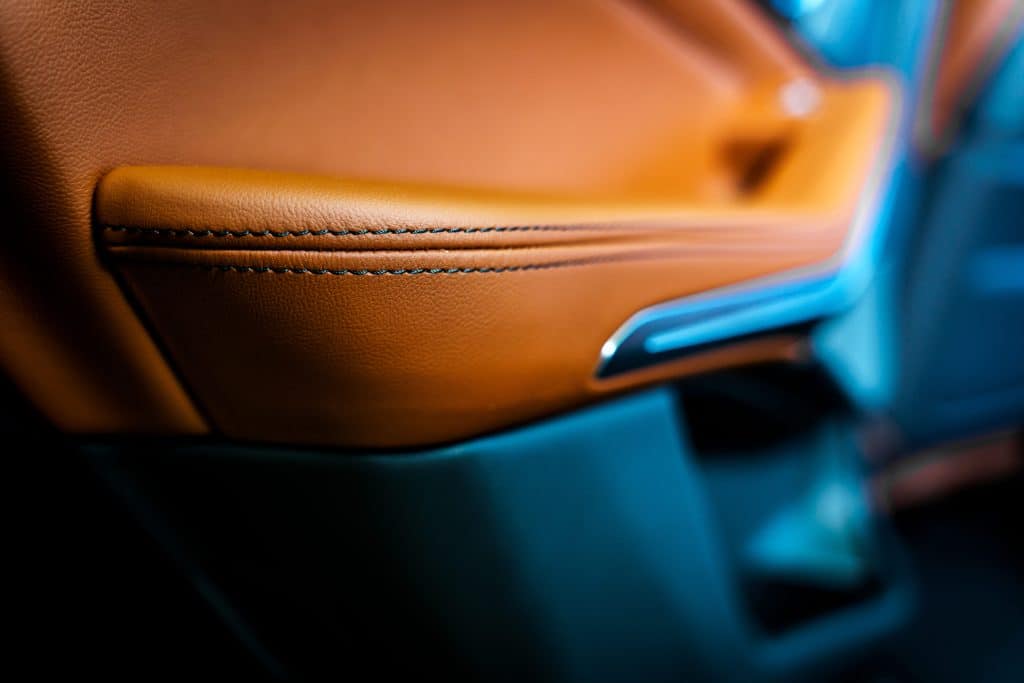
Spend a few minutes inside a new electric car, and you’ll notice the “wow factor” is often the cabin with its clean surfaces, calm lighting, fewer buttons, and more space. With that quieter design language comes a quieter shift in materials, too. Many EV brands are moving away from real leather because the interior now has to express modern values and handle modern use, and in our day-to-day work we’ve seen vegan leather for electric vehicles move from an occasional request to a recurring line in specifications.
Vegan leather for electric vehicles: what’s behind the decision?
EV interiors often aim for a light, uncluttered feel, and materials play a big role in that. Vegan leather for electric vehicles gives designers flexibility without relying on the classic “leather look” as the only definition of premium.
People who buy electric cars are often drawn to the broader idea of responsible innovation. Choosing vegan leather for electric vehicles can be part of that story: an interior that feels current, aligned with the product’s positioning, and consistent with what drivers think an EV should represent.
On the other hand, automotive programmes depend on repeatability, because you want the same colour, the same embossing, and the same feel across long production runs. For many projects, vegan leather for electric vehicles is attractive because it can be specified and tested with clear parameters.
How the cabin is actually used
Here’s the practical side that doesn’t always show up in launch videos: people live in their cars. EV drivers often spend time charging, taking calls, commuting, and using the cabin almost like a small workspace. Seats and armrests see constant contact, and white or light interiors tend to reveal marks quickly.
Comfort is part of performance too. It’s how a surface feels in heat, how it behaves with temperature changes, and whether it keeps a pleasant touch after years of use. Many advanced synthetics are engineered to balance durability with a refined hand feel, which is exactly what brands want when they specify vegan leather for electric vehicles for seating and high-touch zones.
There’s also an efficiency mindset around EV development that influences everything. While upholstery isn’t the biggest lever, EV teams often examine materials through the lens of consistent quality, scalable manufacturing, and predictable behaviour. In that context, vegan leather for electric vehicles fits naturally into a broader approach to material engineering.
A new kind of premium: quieter, cleaner, more deliberate
Luxury in EVs tends to be understated. Instead of trying to impress with tradition, many brands focus on comfort, visual calm, and surfaces that invite touch while staying presentable with everyday use; vegan leather for electric vehicles supports that approach because designers can dial in texture and colour until the cabin feels cohesive.
It also gives manufacturers a clearer path from prototype to production. When a material can be tested, documented, and repeated with confidence, design decisions become easier to scale.
In the end, interior materials are one of the few parts of an EV you experience every single day. You see them in daylight, feel them in summer heat, and notice them after thousands of kilometres. That’s why vegan leather for electric vehicles is a practical, design-forward choice.
EV interiors are evolving quickly, and material choices are part of that evolution. For many brands, moving away from real leather is about creating cabins that feel modern and designed for real life. If you’re specifying materials for an EV interior, start with the essentials, then evaluate vegan leather for electric vehicles against those criteria in a straightforward, testable way.