
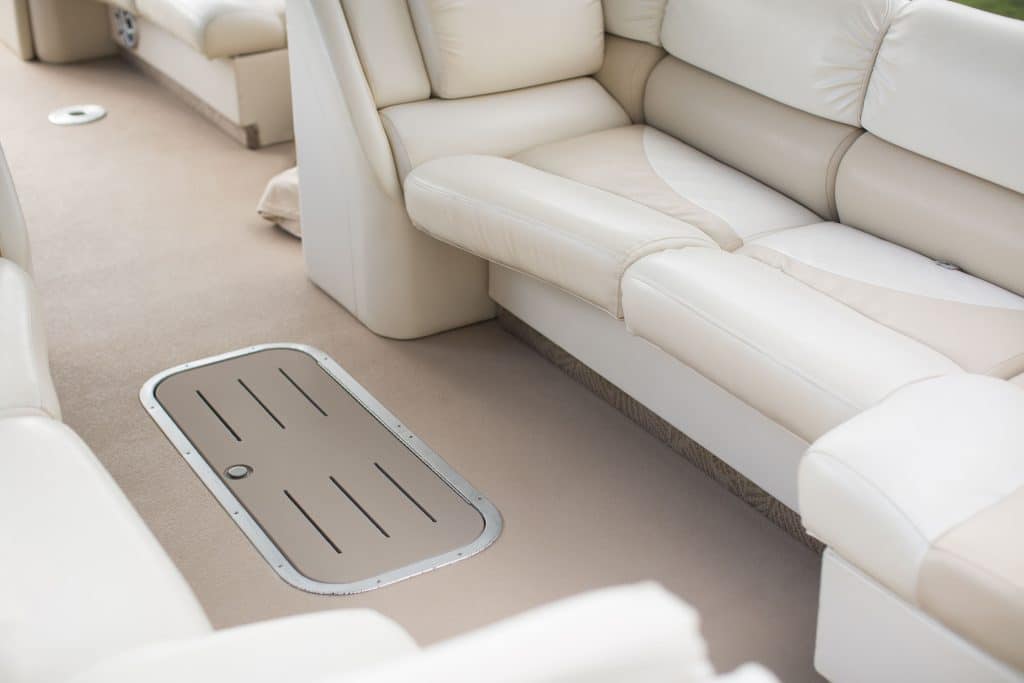
White vinyl upholstery looks fantastic on the water; the trick is keeping it that way without turning upkeep into a weekend project. If you’ve ever come back from a day out and noticed a fine salt film, a faint sunscreen smudge, or that slightly dull look in high-use spots, you already know what we mean; a calm, consistent routine is usually all it takes.
Below, we’ll walk you through what we do (and recommend) to keep white vinyl looking fresh and ready for guests.
Cleaning boat vinyl: a routine you’ll actually keep up with
Start with a quick rinse with fresh water after a trip, because salt and airborne grime settle quietly, and if they sit for days, they’re harder to lift later. A gentle wipe with a soft microfibre cloth straight after rinsing keeps the surface clear and helps you stay ahead of the “mystery marks” that show up on white.
For your regular clean, use a marine-safe, pH-neutral cleaner. “pH-neutral” just means it’s balanced, so it cleans without being overly acidic or alkaline (both can be tough on finishes over time). Work in small sections, and apply the product to the cloth rather than spraying the seat directly when you can. This method gives you more control and keeps stitching and seams from getting unnecessarily saturated.
Before you move on, dry the surface properly. White vinyl tends to show water spots and dull patches more than darker colours, especially in bright light. That is why a quick dry also makes the seating feel better straight away, so your cleaning boat vinyl routine also keeps the boat comfortable day to day.
Preventing stains, yellowing, and wear without overdoing it
If you want white vinyl to stay white, prevention is half the job. Sun exposure is part of boating, of course, but covers and shade when the boat’s not in use help a lot; UV light can gradually flatten the “new” look, and protective habits reduce how hard you need to work later with cleaning boat vinyl.
The other regular culprit is what we all bring onboard: sunscreen, body oils, spilt drinks, damp towels. None of this is dramatic, but on white it’s visible. A quick wipe on high-contact areas often takes less than two minutes. Done little and often, it keeps the vinyl bright and avoids the need for heavy scrubbing.
Protectants can help too, as long as you use them lightly. Seek products made for marine vinyl and apply a thin layer, then buff off any excess so the surface doesn’t feel slick. You’re aiming for a clean, dry finish that repels grime, not a glossy coating that attracts dust. Used sensibly, this step makes future cleaning boat vinyl quicker because dirt has less to cling to.
A quick onboard checklist for white vinyl that’s always “guest-ready”
It helps to keep a small kit onboard so you’re not improvising with whatever’s at hand. We recommend microfibre cloths, a soft brush for textured vinyl (useful in seams and grain), and one trusted marine-safe cleaner.
When you’re cleaning, keep an eye on the stitching lines, piping, and the edges where people slide on and off. These areas collect residue and can look slightly darker if they’re ignored; a soft brush with light pressure is usually enough.
White vinyl upholstery rewards steady, gentle care. A rinse after outings, a regular wipe with a marine-safe cleaner, and a few preventative habits around sun and high-use areas will keep it looking bright without fuss. If you’d like, tell us how your boat is used (day trips vs. long stays, full sun vs. covered mooring), and we can suggest a simple schedule that fits your routine, so cleaning boat vinyl stays easy all season.